LEIA MARSOVICH | JUNE 16, 2015
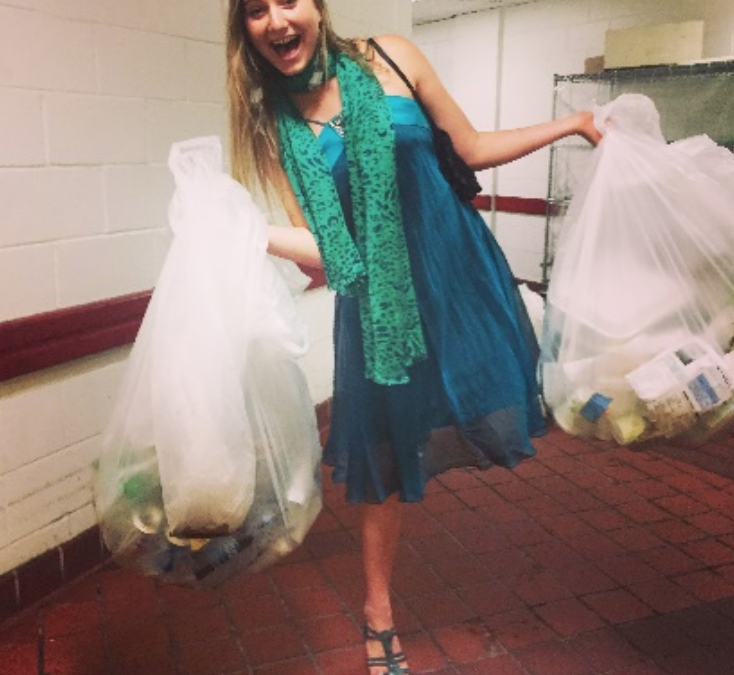
Let’s face it – trash can be a dirty, messy business. Our waste typically consists of the objects we no longer value or find use for, they are the things we essentially do not want anything to do with; but at this year’s Global Green Millennium Awards, we treated trash like it was top of the list! With the help of our mindful attendees, cooperation from our exquisite host, the Hyatt Regency Century Plaza Hotel, and the excited Global Green Zero Waste team, we successfully made our signature awards ceremony a zero waste event for the second year in a row!
So what’s all the buzz about? As it turns out, many of the objects we automatically refer to as ‘waste’ actually have an afterlife. All of the waste from the Global Green Millennium Awards was sent to facilities to be either composted, recycled, or donated – as a result, nothing was sent to the landfill!
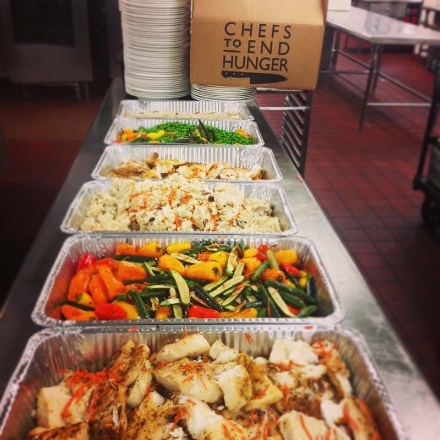
We are proud to announce that 70 pounds of food that would have otherwise been sent to sit in a landfill was donated to LA area food banks through the Chefs to End Hunger program. Not only did this food feed hungry Angelenos, but also contributed to decreasing our greenhouse gas emissions.
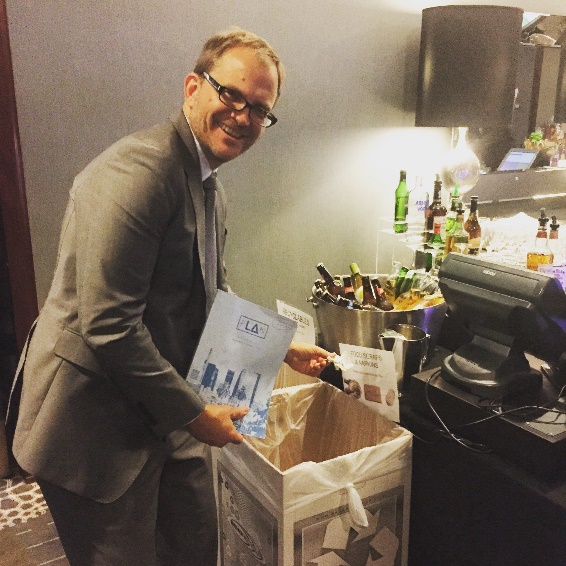
So how did we achieve a zero waste event? First, all of the trash bins were clearly labeled throughout the venue and bathrooms; one for recyclables, one for compostables and napkins, and one for paper towels. All kitchen waste was immediately disposed into an on-site digester, which got mixed with water and sent to the Hyperion Treatment Plant in Playa Del Rey to be anaerobically digested with the city’s wastewater. Next, a Global Green Zero Waste representative trained all the staff from the kitchen, maintenance, janitorial services, and dining services in the most efficient zero waste practices for the remaining recyclables and food scraps that were generated in the front-of-the-house area.
Throughout the ceremony, the Zero Waste team periodically checked that all the waste bins were properly sorted and separated. Lastly, after an inspiring evening of a successful auction, touching performances and speeches by Vandana Shiva, Prince Ea, and others, as well as delicious food and a heartfelt award ceremony, the night concluded with preparing the organics, recyclables, and paper towels to be collected by the waste hauler. The hauler then sent the paper towels to an organics transfer station and the recyclables to a material sorting facility.
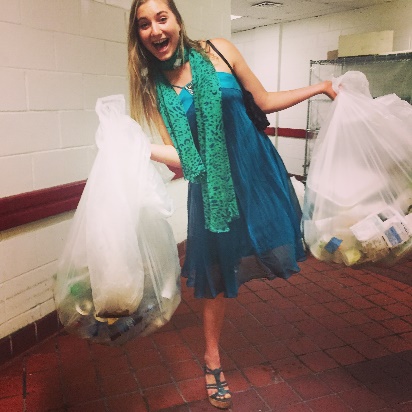
What actually happens when waste is composted or recycled? The compost, which consists of inedible food scraps and napkins, will be converted into nutrient rich soil that can be used for agriculture or on landscapes. Recyclables such as plastic water bottles, glass containers, paper, etc., will be sent to processors and factories to be turned into new products. Global Green takes pride in considering all aspects of sustainability – even when it comes to the dirty and messy! A big thank you to Briana Wellman at the Hyatt Century Regency Plaza and Judi Gregory at NASA Services for helping make the 2015 Global Green Millennium Awards a truly green event.