Publications
2012 QAP Report: Progress and Possibility - Green Building Criteria in Low-Income Housing Tax Credit Programs
The Green Urbanism Program released its 2012 report, "Progress and Possibility: Green Building Criteria in Low-Income Housing Tax Credit Programs."
2012 QAP Report: Progress and Possibility - Green Building Criteria in Low-Income Housing Tax Credit Programs
Creating Sustainable Neighborhoods LEED-ND Assessment Program
Lakewood, CO - Sustainable Neighborhood Technical Assistance
Lakewood CO Technical Assistance Recommendations
West Dearborn Downtown Sustainability Assessment
Urban Agriculture -- Feasibility Study for Youngstown, OH
Global Green is releasing a report, Urban Agriculture Feasibility Study for Youngstown, OH: Opportunities for Healthy Food Production, Local Jobs, and Ecological Restoration. The report will be released at an Urban Agriculture Roundtable that Global! Green is coordinating as part of the 2012 Youngstown State University Sustainable Energy Forum on June 4th and 5th in Youngstown, OH.
ENERGY EFFICIENCY, CLEAN POWER AND THE SMART GRID
Our report highlights the need for integrated strategies in reducing energy use, increased distributed renewable energy generation, and a more intelligent electrical grid and explores the role of the “smart grid” in developing a more sustainable, energy efficient future.
The Smart Grid and Climate Change
What is the Smart Grid?
Our electrical grid is outdated and demand is outpacing supply. The smart grid
will revolutionize how we create and consume energy. The smart grid transforms
our electrical system into a modern network that delivers electricity from
suppliers to consumers using digital technology to save energy, reduce cost and
increase reliability. Such a modernized electricity network is being promoted by
many countries as a way of addressing energy independence and global
warming issues.
Military Energy Security: Current Efforts and Future Solutions
Daniel Sater
In the first six months of 2011, the US civilian power grid suffered 155 blackouts affecting an average of 83,000 people with 36 blackouts affecting over 100,000 people. Despite these staggering numbers, US military bases rely solely on the civilian grid to power 99% of their war fighting capabilities, homeland security missions, and rescue and relief operations. This paper analyzes the Department of Defense’s current efforts to increase energy efficiency and assurance and makes recommendations on the policy options available to the DOD to increase the incorporation of smart microgrids onto its military installations.
Daniel Sater was a Research Fellow at Global Green USA’s Security and Sustainability Office in Washington, DC in the summer of 2011. He is a graduate student at the Frank Batten School of Leadership and Public Policy at the University of Virginia. Daniel holds a BA in Foreign Affairs from the University of Virginia and will receive his Master of Public Policy degree in May 2012.
Abandoned Chemical Weapons in China: The Unresolved Japanese Legacy
Mike Brombach
This paper assesses the reasons for the slow progress in destroying Japanese abandoned chemical weapons in China. Japan abandoned an estimated 300,000 – 400,000 chemical weapons on the territory of China after WWII. Japan is obligated to destroy these weapons by 2012 under the Chemical Weapons Convention (CWC) of 1997. The first chemical weapon in China was not destroyed until fall 2010 and as a result Japan and China are unlikely to meet the 2012 final CWC destruction deadline. The slow pace of progress and inability of Japan and China to meet the 2012 deadline for destruction of the declared chemical weapons are due to the complicated nature of the project along with technical problems, negotiation issues, and financial and diplomatic difficulties.
Dr. Paul Walker's Presentation at the Non-Proliferation Roundtable in Como, Italy
This is the presentation of Dr. Paul Walker, director of the Global Green USA Security and Sustainability Program, at the International Working Group organized by the Landau Network Centro Volta in Como, Italy, which hosted a working roundtable meeting on Monday, June 20, 2011 on the subject of "Science Collaboration and Security: A New Global Outreach to Key Actors.
Unknown Chernobyl: History, Events, Facts, Lessons
This publication is a part of our Archive Series. It was published in 2006 on the 20th anniversary of the disaster. It explores the historical and scientific problems concerning the legacy of radiation at the site.
Millennium Awards Sponsorship Deck
Please click here to download our latest sponsorship deck for the 2011 Millennium Awards.
Good Jobs Green Jobs - A Presentation by Mary Luevano
Case Study: Edes Avenue
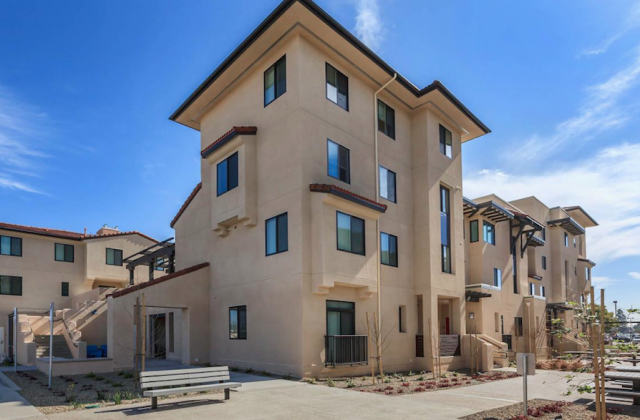
The Edes Ave. neighborhood is the largest and greenest Habitat for Humanity development in the state of California. The entire community was certified by the US Green Building Council’s (USGBC) Leadership in Energy and Environmental Design (LEED) for Neighborhood Development rating system and Build It Green’s Green Point Rated Program. Six of the 54 townhomes are also certified by the LEED for Homes rating system, with three homes in phase A meeting Gold standards and three homes in Phase B meeting Platinum standards. According to Habitat for Humanity East Bay (HEB) Affiliate’s executive director, Janice Jensen, from this project forward, HEB is dedicated to incorporating green features in their construction methods. Such features include advanced framing techniques, passive solar design, resource efficiency, and renewable energy. Another exceptional fact about HEB projects is that unpaid volunteers and the future homeowners help build the homes from the ground up.
GLOBAL GREEN SUPPORTS PASSAGE OF UN SEA-DUMPED CHEMICAL MUNITIONS RESOLUTION
A UN Second Committee resolution addressing sea-dumped chemical munitions is expected to be voted on by the General Assembly on December 20th. A PDF text of the resolution can be downloaded here.
FLOATING NUCLEAR POWER PLANTS IN RUSSIA: A THREAT TO THE ARCTIC, WORLD OCEANS, AND THE NONPROLIFERATION TREATY
Third edition; edited by V. M. Kuznetsov, St. Robinson and V. Rossi
A 2004 study by Green Cross Russia found significant risks in deploying the kinds of floating nuclear power plants proposed in Russia.
This study is the first in a series of publications to be re-released as part of our Archive Series (1994-2007). The series will feature works in English and Russian that continue to be relevant to today's policy debates.
PRESENTATION AT THE UNITED NATIONS ON SEA-DUMPED CHEMICAL WEAPONS
Dr. Paul F. Walker
The Lithuanian Mission to the United Nations organized a discussion before the UN Second Committee on Thursday, November 11, 2010, to discuss a draft resolution on sea-dumped chemical weapons. Dr. Paul F. Walker, director of the Security and Sustainability Program at Global Green USA, and Dr. Terrance Long, an international expert on sea-dumped munitions, were both introduced by Lithuanian Ambassador Dalius Cekuolis. The session was chaired by Mr. Tory Torrington from the Mission of Guyana.
Global Green USA 2009 Annual Report
In 2009, despite having to do our own belt tightening, we achieved significant results in tackling climate change and revitalizing communities from the inside out. We worked across the nation to create sustainable urban environments and combat global warming through our focus areas of green affordable housing, green schools, community education, solar energy and sustainable city programs. This is not to mention our critical work to eliminate nuclear and chemical weapons, and ensure access to clean water for all of humanity.
2010 Green Building Criteria in Low Income Housing Tax Credit Programs
Global Green USA has prepared its 6th annual QAP Green Building Rating Summary. Global Green is committed to advancing green building practices to be an integral component of affordable housing. As part of the work we conduct through the Green Affordable Housing Initiative, we produce an annual ranking and summary of green building trends in state QAPs across four categories - Smart Growth, Energy Efficiency, Resource Conservation, and Health Protection.
The 2010 report also shows that the Top 15 most referenced green building strategies are reflected in nearly two thirds of the state QAPs, a significant increase from 2009. The broad adoption of these 15 measures indicates that they are seen by developers nationally as high-value and low additional cost, which also suggests that a new, higher and greener standard in affordable housing is emerging; one that should be comprehensively promoted and ultimately codified.
For 2010, we are pleased to report a steady increase in the percentage of points attained across all of our ranking categories. Thirty-three states improved their scores this year, and the average score increased from 30 to 33. Connecticut and Georgia tied for the top position for the second consecutive year, both earning 50 points of a possible 55.
Green Urbanism Leaders Summit: Outcomes and Ideas report.
Green Urbanism Leaders Summit. In February 2009, Global Green USA gathered a group urban and environmental thinkers and doers a two-day discussion on the compelling but elusive concept of green urbanism.
Case Study: Andrew H. Wilson Elementary School
Andrew H. Wilson Elementary School is a model high performance school for the New Orleans Recovery School District’s $1.8 billion school construction program. Andrew H. Wilson is a kindergarden through 8th grande school for approx. 540 students. The campus includes: 26 classrooms, a cafeteria, a gymnasium, an art studio, a music room, a computer lab, a library, and administration facilities. The school features an environmentally friendly site design, and was designed to meet LEED for Schools 2007 standards and is anticipated to achieve LEED for Schools Gold certification by the United States Green Building Council (USGBC).
Case Study: Green Dot Charter Schools
Green Dot Charter Schools, in partnership with Pacific Charter School Development (PCSD), opened the doors of Animo Ralph Bunche and Animo Justice High School’s permanent facility in September 2008. Providing over one thousand new seats for students in South Los Angeles, the schools transformed two former industrial spaces into a 77,173 square foot Leed Certified educational campus. Now operating as Animo Ralph Bunche and Animo Jefferson Middle School, the schools are examples of a green approach to planning, design and operations in an urban setting ripe for adaptive reuse.
Japanese Potentially Polluting Wrecks in the Pacific Ocean
Ryo Sato
This paper assesses the location and potential dangers of contaminant associated with Japanese sunken ships and the possible contaminants, including oil and chemical weapons, leaking from the sunken ships in the Pacific Ocean. Many countries dumped chemical agents into the ocean; some agents, including chemical munitions, were dumped intentionally and others accidentally into the ocean. In either case, marine disposal of chemicals of all kinds threatens human and environmental life. Released July 2010.
Sea-Dumped Chemical Weapons in Hawaii
Ryo Sato
This report summarizes the problems, background, and risks, of sea-dumped chemical munitions primarily around the island of Oahu. From 1932-1945, the U.S. Army dumped thousands of tons of chemical weapons off Hawaii’s coasts. Until the Virginian Daily Press drew attention to these chemical munition dumpsites in 2005, the general population of Hawaii was unaware of their existence.The University of Hawaii has been investigating chemical weapons dumpsites and has found a number of sea-dumped chemical munitions around the heavily populated island of Oahu. Released July 2010.
Sea-Dumped Chemical Weapons in Japan
Ryo Sato
This paper primarily assesses the document “The National Survey on Toxic Gas of the Former Army,” prepared by the Japanese Ministry of the Environment, relating to sea-dumped chemical munitions, as well as other materials. The issues examined are the history of chemical weapons in Japan including production, stockpiles and especially sea-dumping of these munitions. Released in May, 2010.
RUSSIA’S UNEASY RELATIONSHIP WITH IRAN
Marina Voronova-Abrams
U.S. Secretary of State Clinton's March visit to Moscow underlined the continuing tensions the U.S. and Russia are having over Iran. While the Obama administration is pushing for strict sanctions against Iran, Moscow is urging greater caution and expressing frustration at the U.S. about restrictions to trade.
Defense Sustainability: Energy Efficiency and the Battlefield
Schuyler Null
An important shift in thinking is occurring across the nation as informed citizens, private industry, and the federal government, have begun acknowledging the realities of a carbon-constrained, petroleum-dependent world. Global Green USA has released an analysis of the impact that more sustainable practices might have on the U.S. Department of Defense. The study illustrates how very important energy has become as a determinant of national and international security, and also how large an environmental impact the U.S. military has as the nation’s single largest power consumer. Released February, 2010.
A Green Platform for New Orlean's Next Mayor and Council
The Green Platform for New Orlean's Next Mayor and Council document outlines essential steps for a greener, safer city. This eight-point plan - put together by the Green Collaborative - provides a blueprint for New Orleans’ new leadership. The Green Collaborative consists of 66 organizations and groups that represent thousands of citizens and concerned professionals living in southern Louisiana. The Collaborative supports existing green guidelines for the City including the GreeNOLA and the NOLA Recycles plans, as well as the process being undertaken by the Horizon Initiative’s Water Management Committee. Released January, 2010.
Global Solar Report Card - Updated 2009
The Global Solar Report Card by Global Green USA and Green Cross International outlines successes and failures in efforts to design promising policy frameworks for sustained solar development in 16 countries (and the state of California). It finds all countries still in the early phases of solar deployment. The ranking is based on a 100-point system that allocates points for the amount of solar installed so far, as well as for drivers of future growth, including financial and regulatory incentives, and educational and advocacy efforts.
City of New Orleans Carbon Footprint Report 2009
This report, that Global Green helped to prepare, details the City of New Orleans’ activities and findings as a participant in the Cities for Climate Protection (CCP) Campaign and ICLEI member from 1999 to 2009, focusing on the most recent GHG inventory, with 2007 data for its baseline. Included in this document is a quantification of 2007 GHG emissions, comparison to the 1998 data, descriptions of ongoing and proposed reduction measures, and recommendations for going forward.
Green Affordable Housing Initiative Case Studies
These case studies describe innovative green affordable housing projects that range from maximizing green building techniques with limited resources to meeting net zero goals. You can download all four case studies by clicking the DOWNLOAD link, or click for the individual case studes here: Los Vecinos, SOLARA, Nueva Vista, Colorado Court, First Community Housing.
Global Solar Report Card
The Global Solar Report Card by Global Green USA and Green Cross International outlines successes and failures in 16 countries’ (and the state of California’s) efforts in designing promising policy frameworks for sustained solar development. It finds all countries still in the early phases of solar deployment. The ranking is based on a 100-point system that allocates points for the amount of solar installed so far, as well as for drivers of future growth, including financial and regulatory incentives, and educational and advocacy efforts.
The Green Building Guide - New Orleans
The Green Building Guide was published in March of 2009, and was designed to help New Orleanians find the green products and services that will make it easier for them to save money on rising energy bills, improve the indoor air quality and health of their homes and do their part to help rebuild a more resilient, greener New Orleans. By encouraging green rebuilding, Global Green is helping make New Orleans a model for how cities can rebuild in a climate friendly way.
10th Russian National Dialogue on Chemical Weapons Destruction
The presentations included in this volume are from a two-day “forum-dialogue” organized by three national affiliates of Green Cross International – Green Cross Russia, Global Green USA, and Green Cross Switzerland. This meeting took place in Moscow, Russia on October 28-29, 2008, and was the Tenth annual National Dialogue on Chemical Weapons Nonproliferation and Destruction organized by Green Cross and Global Green USA as part of the international Legacy of the Cold War Program.
The presentations covered a wide variety of important issues, including costs and schedules of destruction; financial support by Russia, the US, and other G-8 Global Partners; public health and environmental monitoring; state and regional regulations and permits; and citizen concerns. While not all-inclusive, this annual forum-dialogue is the one place where a reader can obtain a comprehensive overview of the many challenges involved in abolishing chemical munitions.
Developing Green Building Programs: A Step-By-Step Guide for Local Governments
Global Green USA’s step-by-step guidebook outlining a six-step process that local agencies can utilize to develop their own green building programs. The process was developed based on the real world experience that Global Green has gained in working with local governments to develop green building programs in cities such as, San Francisco, Santa Monica, Pasadena, Irvine, West Hollywood, and New Orleans.
The 11th Hour DVD
The film explores how we’ve arrived at this moment -- how we live, how we impact the earth’s ecosystems, and what we can do to change our course. Featuring ongoing dialogues of experts from all over the world, including former Soviet President Mikhail Gorbachev, renowned scientist Stephen Hawking, former head of the CIA R. James Woolsey and sustainable design experts William McDonough and Bruce Mau in addition to over 50 leading scientists, thinkers and leaders who discuss the most important issues that face our planet and people. A portion of the profits will be donated to Global Green.
2009 National Security and Nonproliferation Briefing Book
Ploughshares Fund's Peace and Security Initiative has just released its 2009 National Security and Non-Proliferation Briefing Book. This resource offers President-elect Obama and his administration expertise and advice from some of the best minds -- including 22 Ploughshares Fund grantees, former government officials and other experts -- on the most important and pressing proliferation and national security challenges they will face upon taking office. Issues covered range from "Moving To A World Free of Nuclear Weapons" to "The Iraq War" and "U.S. Homeland Security. Dr. Paul Walker, Security and Sustainability Program Director at Global Green USA, contributed to two chapters on US-Russian Relations (page 45) and Chemical and Biological Weapons (page 77).
Solar City Report: How Los Angeles can Gain the Economic and Environmental Competitive Edge
Global Green USA's proposal for the City of Los Angeles to develop its solar resources by committing to "carving out" 1% (80 megawatts) of its electrical generation capacity for photovoltaic technology. Benefits for the City include economic development opportunities, stabilizing electric rates, improving air quality and reducing green house gas emissions. Winter 2005.
Green Building Developer Fact Sheets
As part of Global Green's Greening the Tax Credits Campaign, an effort to encourage various states around the country to adopt sustainable building practices as part of the state-administered federal low-income housing tax credit program, we recently published Green Building Developer Fact Sheets, which highlight various sustainable building practices and provide information about local product availability and cost. The first set of fact sheets is for Louisiana, the second set for NY State.
Second Russian National Dialogue On Energy, Society And Security
This collection was put together by Green Cross Russia, Green Cross Switzerland, and Global Green USA. It includes reports and speeches as well as the question-and-answer sessions that took place at the Second Public Dialogue on Nuclear Energy, Society and Security, organized and held on April 21–22, 2008 in Saint Petersburg, Russia. The presentations at this conference provide an assessment of the key risks of civil nuclear facilities and the military facilities that have been phased out (including nuclear submarines) and radioactive waste and spent nuclear fuel management. They also address options for resolving today’s key problems in the safe use of nuclear technology, including offering policies with regard to the environmental safety of using nuclear energy, and reaching an agreement with the public on various aspects of nuclear and alternative energy developments.
Russian Chemical National Dialogue Proceedings
The proceedings of the 9th Chemical National Dialogue on the Implementation of the Chemical Weapons Convention by Russia as of the end of 2007. Nearly 150 experts, representing media, academia, federal authorities, and residents of those areas affected by CWD, took part in the Dialogue.
Russian Nuclear National Dialogue: Energy, Society, and Security
The 1st Russian Nuclear National Dialogue meeting in Moscow on 18-19 April 2007 showed the enormous range of complex and unaddressed subjects in the Russian nuclear energy and security discussions and the difficulty for the diverse stakeholder groups to discuss these critical issues in a productive way. The Green Cross conference provided a unique platform to begin to address these challenges in a serious and transparent manner.
Global Green USA’s Policy Report Series Community Development Through Climate Solutions: Los Angeles and Beyond
Funded by the Ford Foundation - This report identifies strategies that can simultaneously build community assets while promoting strategies to reduce greenhouse gas emissions. The report suggests using existing financial regimes or creating new ones where necessary and by engaging community and non-environmental stakeholders.
Building Blocks
The Building Blocks provide concise information on several of the most important green building issues. This enables community development corporations, for-profit developers, architects, and builders to quickly gain an understanding of green building issues. The Building Blocks can also be used to identify specific opportunities for upcoming development projects.
The Building Blocks also provide eight case studies from the country to illustrate how various strategies and approaches have been implemented in actual projects.
Abolishing Chemical Weapons
This article by Sergei Baranovsky, Stephan Robinson, & Paul Walker is an Op-Ed published by the Boston Globe. June 2000.
Sustainability in the Southeast: Partnering Community, Business and Military for Environmental Protection
Report from the Sixth Annual Legacy Forum on Military Toxic Cleanup and the Environment, held December 4-5, 1999 at Georgia State University's Student Center in Atlanta, Georgia. This is a part of our Archive Series.
Implementing the Chemical Weapons Convention: Technical and Political Challenges in the US and Russia
Article by Dr. Paul F. Walker, Legacy Program Director, concerning current obstacles to full CWC implementation and CW abolition. Reprinted from Harvard/Sussex CBW Bulletin, June 1999.
Moving Toward Sustainable Conversion, The Third Annual National Forum on Military Toxic Cleanup and Base Conversion
The Forum brought together a broad cross-section of over 200 citizens, officials from local, state and federal government, defense and service branch personnel, non-profit groups and others working on military base cleanup and conversion issues. The day was highlighted by Green Cross International President and Nobel Laureate Mikhail Gorbachev who gave an enthusiastically received speech on "The Environmental Legacy of the Cold War: The Challenge to Communities and the World." President Gorbachev was introduced by fellow Nobel winner Oscar Arias Sanchez, the former president of Costa Rica. November 1996.