Global Green
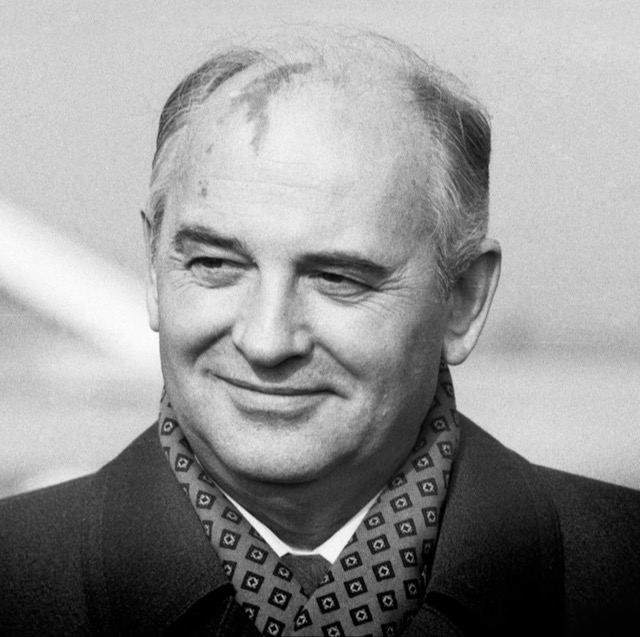
Mikhail S. Gorbachev
 Search coming soon.
HOME Publications Events Press Awards About Donate
Green Building, Cities and Schools
Climate Change and Energy
Water
Weapons of Mass Destruction
Water
Green Building Resource Center
Rebuilding New Orleans
Take Action!


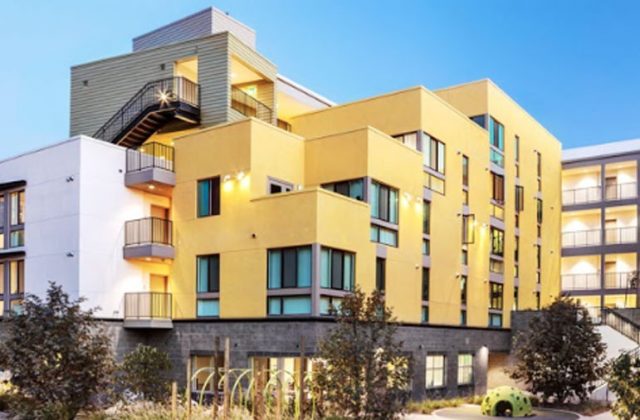
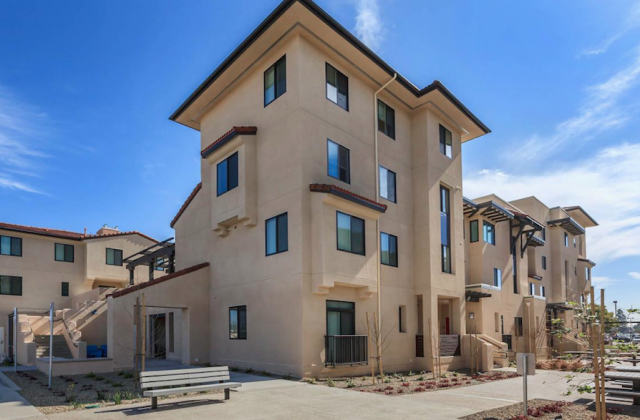
Global Green USA has just released the 2nd edition of its nationally acclaimed Blueprint for Greening Affordable Housing. Drawing on over a decade of experience by Global Green staff on technical assistance and policy development, the Blueprint for Greening Affordable Housing offers housing developers, designers, advocates, public agency staff, and the financial community specific guidance on green practices and innovative strategies for incorporating green building strategies into the design, construction, and operation of affordable housing developments. Learn More


Developing Green Building Programs: A Step-By-Step Guide for Local Governments - Global Green USA’s recently completed step-by-step guidebook outlining a six-step process that local agencies can utilize to develop their own green building programs. The process was developed based on the real world experience that Global Green has gained in working with local governments to develop green building programs in cities such as, San Francisco, Santa Monica, Pasadena, Irvine, West Hollywood, and New Orleans. Download


Healither, Wealthier, Wiser: A Report on National Green Schools - In this report, Global Green USA outlines the significant benefits of green schools which include improved learning, reduced operating costs, and better student attendance (which translates into more dollars for school districts). In addition, this national report provides a green school practitioner guide, case studies, and a reference guide to draft a green school resolution. The report also offers the first overview of Global Green’s landmark green schools initiative in New Orleans made possible by a grant from the Bush Clinton Katrina Fund. Download


Global Green USA’s Policy Report Series Community Development Through Climate Solutions: Los Angeles and Beyond - funded by the Ford Foundation – This report identifies strategies that can simultaneously build community assets while promoting strategies to reduce greenhouse gas emissions. The report suggests using existing financial regimes or creating new ones where necessary and by engaging community and non-environmental stakeholders. Download

Peter and the Wolf and Wolf Tracks CD released. Introduced by Mikhail Gorbachev. Narrated by Sophia Loren and Bill Clinton. A portion of the proceeds supports the Green Cross and other charitable organizations.
Click here to order on Amazon.com


Healthier, Wealthier and Wiser -This report outlines the gains that a school district and it's community can achieve by building green, including: higher student performance, increased attendance, lower operational costs and increased public investment.


Green Cross Russia Sixth National Dialogue Forum 2004 Workshops and lectures given at the sixth public Dialogue-Forum on the "Implementation of the Chemical Weapons Convention by Russia: Status and Prospects as of Year End 2004." Hosted by Green Cross Russia (GCR), held November 2004 in Moscow. Winter 2005. 224 pages..


Solar City Report: How Los Angeles can Gain the Economic and Environmental Competitive Edge
Global Green USA's proposal for the City of Los Angeles to develop its solar resources by committing to "carving out" 1% (80 megawatts) of its electrical generation capacity for photovoltaic technology. Benefits for the City include economic development opportunities, stabilizing electric rates, improving air quality and reducing green house gas emissions. Winter 2005. 24 pages. Download

A Blueprint for Greening Affordable Housing: Developer Guidelines for Resource Efficiency and Sustainable Communities supports community-based affordable housing developers throughout the development process by demonstrating environmental building principles through case studies, and makes recommendations for design, construction and operation. Summer 1999. 142 pages. Download


Sustainable Building Guidebook, Checklist and Sourcebook are publications developed for the Los Angeles Sustainable Building Program (LASBP). The Guidebook and Checklist outline sustainable building practices and identify cost comparisons. The Sourcebook identifies product manufacturers and suppliers in the Southern California region. Summer 1999. Guidebook and Checklist: 25 pages. Sourcebook: 85 pages. Download

Building Blocks are a collection of one page fact sheets that highlight specific green building case studies and practices. 4 pages. View Online


RoadMaps: Greening the Bottom Line is a guide for retrofitting commercial properties, particularly tenant-occupied office buildings, to improve energy efficiency and reduce operating costs. Summer 1999. 10 pages. Download


Resource and Energy Efficiency in Public and Assisted Housing/Policy Report is a report outlining recommendations made by participants from a GG USA Roundtable to HUD Secretary Andrew Cuomo on ways to increase resource and energy efficiency and save HUD between $300 million and $1 billion annually. Spring 1999. 20 pages. Download

New Home Construction and Home Remodeling Green Building Guidelines
Global Green USA worked with Alameda County and What's Working to develop green building guidelines for building and remodeling homes. Several other Bay Area counties are adapting and using the guidelines as the basis for local green building programs. For more information about the Alameda County Waste Management Authority programs and green building resources please visit www.stopwaste.org.2001. 49 pages.
Download New Home Construction Guidelines
Download Home Remodeling Green Building Guidelines

OPCW Synthesis A publication by the Organization for the Prohibition of Chemical Weapons, which features several articles by Paul Walker, Stephan Robinson and Sergei Baranovsky. Summer Issue/August 2000. 39 pages.


The Challenge of Destroying Chemical Weapons Article by Dr. Paul F. Walker on the current obstacles facing chemical weapons demilitarization. Reprinted by the Federal Facilities Environmental Journal/Summer 2000. 6 pages.

Abolishing Chemical Weapons Article by Sergei Baranovsky, Stephan Robinson, & Paul Walker. Op-Ed published by the Boston Globe. June 2000. 2 pages. Download

Implementing the Chemical Weapons Convention: Technical and Political Challenges in the US and Russia Article by Dr. Paul F. Walker, Legacy Program Director, concerning current obstacles to full CWC implementation and CW abolition. Reprinted from Harvard/Sussex CBW Bulletin, June 1999. 4 pages. Download

Environmental Evaluation of the State of Kuwait Seven years after the Gulf War. (Green Cross International, December 1998).
117 pages.


Third Public Hearing on Chemical Weapons Destruction in Kurgan, Shchuch'ye, Russia This collection contains the materials of the Third Public Hearings on destruction of CW stored at the storage facility in Shchuch'ye Area, Kurgan Region (Kurgan, Shchuch1ye, July 8-10, 1997). 248 pages. Download


Citizen Advisory Boards And Public Involvement: Discussion of the Role of Citizens in Public Decision-Making, Post-Cold War Demilitarization, and Environmental Clean-Up The establishment of Restoration Advisory Boards (RABs) to provide public input into military base remediation, and Citizens' Advisory Commissions (CACs) to provide a forum for citizen and state concerns during the demilitarization of chemical weapons arsenals in the United States, has provided two excellent models of public involvement in decision-making. March 23-24, 1999. 31 pages. Download

Surveillance of the Former Chemical Weapons Destruction Facility in the Penza Region Investigative research report of Green Cross Russia concerning a non-stockpile, dumping ground for lewisite chemical agents in the Penza Region of Russia. Available in both Russian and English. July 1998. 104 pages. Download

Risk analysis of the CW stockpile in Kambarka, Udmurt Republic, Russia Final report March-November, 1995. 92 pages. Downlaod

Chemical Weapons Destruction in Russia: Opportunities for Regional Development, Civil Society and Business Institute for EastWest Studies/Global Green USA/Green Cross Russia workshop summary report. (May 18, 1999) 17 pages. Download

Sustainability in the Southeast: Partnering Community, Business and Military for Environmental Protection Report from the Sixth Annual Legacy Forum on Military Toxic Cleanup and the Environment, held December 4-5, 1999 at Georgia State University's Student Center in Atlanta, Georgia. 45 pages. Download

Creating Sustainable Communities: Cases of California Base Closures Summary report of the Fifth Annual Legacy Forum. The Forum, held on November 19, 1998 in San Diego, California, highlighted military base closure, cleanup, and redevelopment in Southern California and devoted special sessions to creative reuse and preservation, green strategies for base reuse, innovative clean-up technologies, and successful restoration processes. Participants included representatives of the military service branches --federal, state, and local government -- and community organizations. 30 pages. Download

Moving Toward Sustainable Conversion, The Third Annual National Forum on Military Toxic Cleanup and Base Conversion The Forum brought together a broad cross-section of over 200 citizens, officials from local, state and federal government, defense and service branch personnel, non-profit groups and others working on military base cleanup and conversion issues. The day was highlighted by Green Cross International President and Nobel Laureate Mikhail Gorbachev who gave an enthusiastically received speech on "The Environmental Legacy of the Cold War: The Challenge to Communities and the World." President Gorbachev was introduced by fellow Nobel winner Oscar Arias Sanchez, the former president of Costa Rica. November 1996. 4 pages. Download

The Legacy Program Forum: A National Forum on Military Toxics Collection of related articles from GG USA's Second Annual Legacy Forum, April 7, 1995 in Washington, D.C. Articles cover military base conversion, destruction of chemical, nuclear, and conventional weapons, and military toxic health issues. Also transcript of the forum. 103 pages. Purchase

Report & Recommendations from the Military Toxics Meeting The first annual NATIONAL FORUM ON MILITARY TOXICS was held at the Albert Schweitzer Institute for the Humanities, Quinnipiac College in Hamden, Connecticut. June 22-23, 1994. 5 pages. Download

National Policy Dialogue on Military Munitions: Final Report Report resulted from 7 meetings since January 1997 with a diverse set of stakeholders on policy-level issues associated with conventional military munitions. September, 2000. 76 pages. Download

The Destruction of Chemical Weapons: U.S. & Russian Program, Policy, and Technical Options Summary report of GG USA's ChemTrust Workshop, July 23-24, 1996. 4 pages. Download

Public-Health Survey of Residents of Votkinsk and Votkinsk Region, Udmurt Republic. Green Cross Russia Survey period: September 1999-April 2000. 205 pages. Download

Preliminary Assessment of Public-Health Impact for Solid Rocket Motor Disposition Facility Near Votkinsk in the Udmurt Republic
Green Cross Russia. July 1999-April 2000. 145 pages. Download


A Blueprint for Greening Affordable Housing: Developer Guidelines for Resource Efficiency and Sustainable Communities

More Green Building Cities and Schools publications......

Solar City Report: How Los Angeles Can Gain the Economic and Environmental Competitive Edge

More Climate Change publications......

Russian Nuclear National Dialogue: Energy, Society, and Security

More Weapons of Mass Destruction publications......
2003 | 2002 | 2001

More Newsletters......

© 2006 Global Green USA Email: ggusa@globalgreen.org Site by: Tree Media Group